
Sim city
A must-read book on affordable housing policy (it's not Abundance)

Though I may struggle to remember, say, birth dates of close friends and family, at least this detail is permanently etched in my memory: in the ‘90s PC game SimCity 2000—where the player is a combo mayor & central planner responsible for zoning, tax rates, electric and water infrastructure, etc.—typing in IMACHEAT instantly provided a $500,000 budget (massive, in the game’s economy) and unlocked futuristic technologies like fusion power plants.
My countless hours obsessing over SimCity foretold the lifelong amateur interest I’ve maintained in urban planning, mass transit, and housing issues. For example, during my full-time MBA program, I talked my way into an unpaid internship for the Chicago Mayor’s office, and my favorite academic achievement was authoring a case study on affordable housing policy. (In it, I examined why projects like Pruitt-Igoe in St. Louis and Cabrini-Green in Chicago failed, and the mechanics of patchwork solutions in the U.S. like “Section 8” and housing vouchers. I also surveyed different strategies pursued in Brazil, France, and Singapore.)
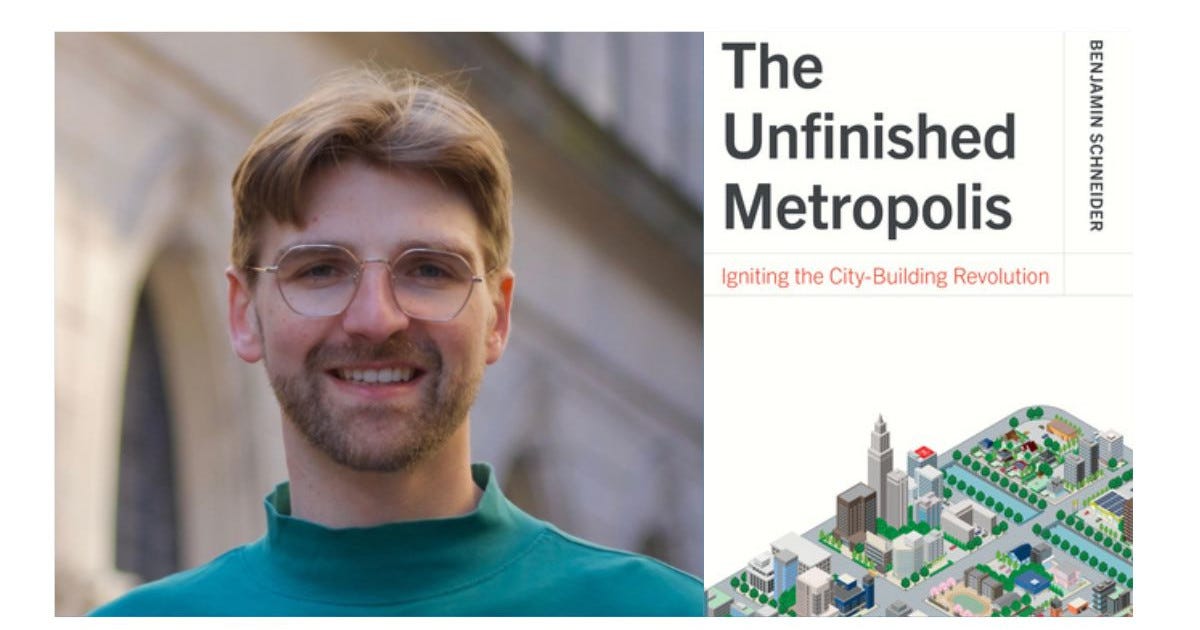
Then there’s what turned out to be my favorite non-fiction book of 2025.1 (Frankly, it’s the book I wish Abundance had been…)2 It doesn’t have a pithy title, but The Unfinished Metropolis: Igniting the City-Building Revolution by Benjamin Schneider is the work from which I’ve learned the most.3
Both Schneider and I are residents of San Francisco—so often a ground zero for battles over homelessness, urban density, zoning, and government bureaucracy. Schneider’s animating thesis is that cities like SF are forever “unfinished” projects that, until the past few decades, were more adaptive to meeting people’s needs.4
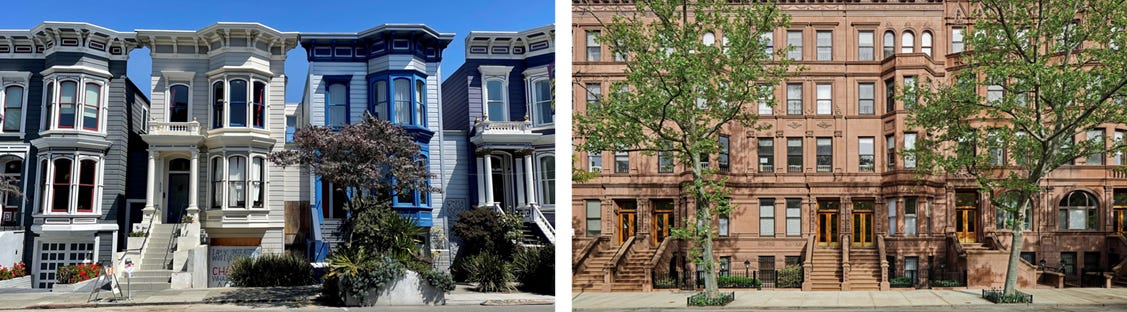
I’ve benefited from one small example of this urban responsiveness. For much of my SF tenure, I’ve been a renter in Victorian row houses in the Mission District. They were all built as individual homes, but decades ago were converted to multi-family housing (apartments), and thereby the neighborhood has been able to accommodate many more residents. NYC actually pioneered this sort of transformation. The city’s 19th century brownstones “were originally constructed as single-family homes for the upper middle class”. Allowing the conversion of many of them to apartments was a decision the city wisely made in response to a post-WWI housing shortage.

Zoning can be a topic that puts most people to sleep, but it’s crucial to manage a city’s density actively—and fairly. When upzoning and new construction is largely only permitted in lower-income, more racially diverse neighborhoods (e.g. Mission, SoMA in SF; Harlem, South Bronx in NYC) but not wealthier neighborhoods (e.g. Pacific Heights in SF; Upper West Side in NYC), that’s when the dreaded bogeyman of “gentrification” is a real problem.
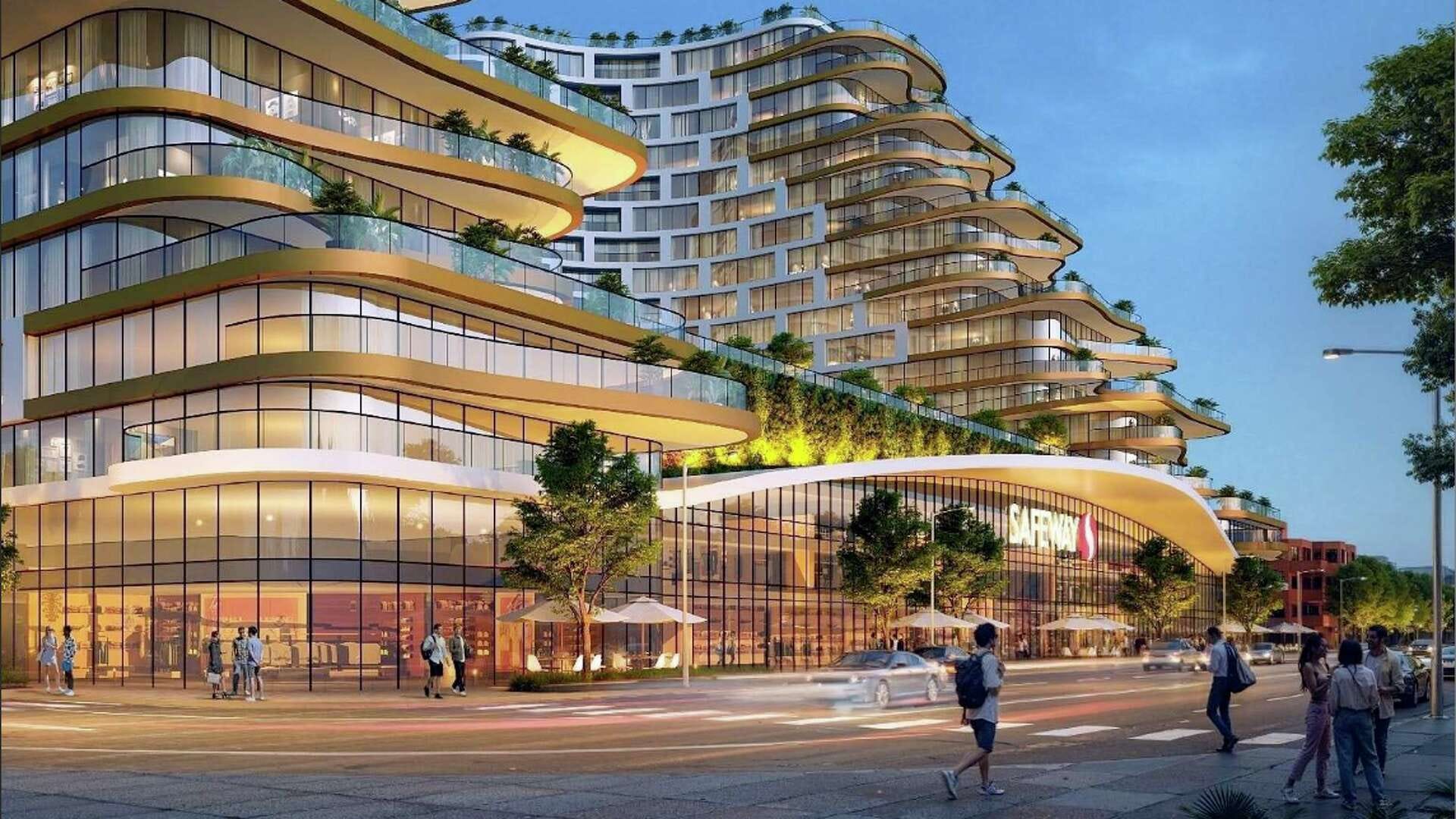
In my city, I often think, how long can we realistically delay affecting certain residents’ sightlines? Since the 1960s backlash to the Fontana Towers, San Franciscans rejected “Manhattanization” of their northern waterfront, and caused a 40-foot building height limit to be enshrined for decades.5 The current-day controversy over a potential 25-story residential tower above the Marina Safeway exemplifies how little has changed.6
Schneider’s book is full of seemingly mundane tweaks that could, collectively, make a transformative impact on housing. For example, in contrast to most other countries, US building codes (though notably not in Seattle and NYC) require apartment buildings to have at least two sets of stairwells. This requires more land and limits building design in meaningful ways, allowing for only one exterior face and reducing access to natural light and ventilation.7 Another example of archaic building codes: they tend to require larger-than-necessary elevators, which also often must be built on-site rather than at a factory.
“In 2017, Buffalo became the first major city in the U.S. to completely eliminate minimum parking requirements. A parade of cities, including Hartford, San Francisco, South Bend, Raleigh, and Austin, eventually followed.”
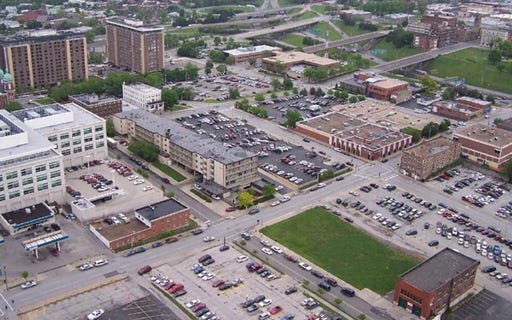
Other suggestions by Schneider include encouraging office-to-residential conversion; replacing parking lots with housing; open-sourcing innovative, code-compliant blueprints; and reconsidering cheaper building materials.
There has been a long-standing bias against wood frames in high-rise buildings due to fire concerns. But “new building technologies have changed the wood construction equation,” Schneider writes, saying that they can now be built “superstrong” and “fireproof”. The 25-story Ascent MKE in Milwaukee became the world’s tallest mass timber structure when it opened in 2022.
“Tokyo builds roughly ten times more homes, per capita, than New York City does, because of permissive zoning rules and the widespread use of modular construction.”
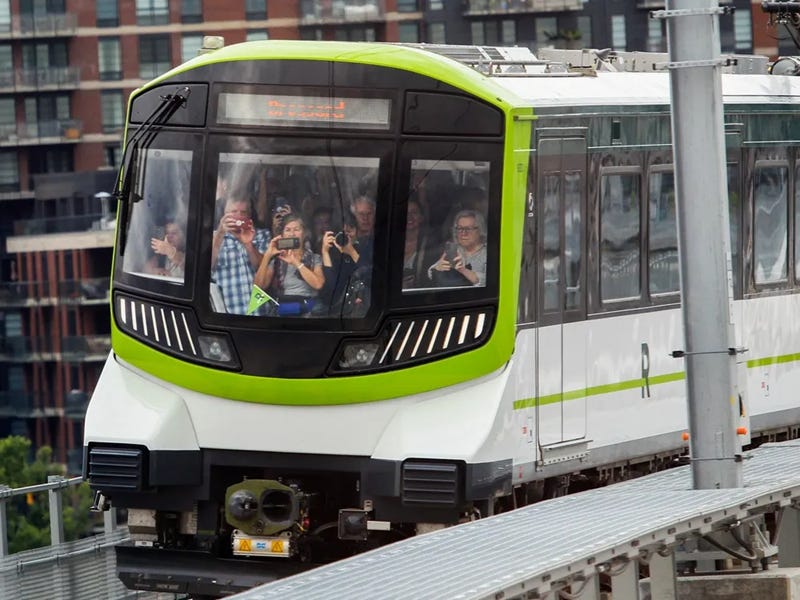
In this post, I’ve focused entirely on housing, but I’d be doing a disservice if I didn’t mention that’s largely only the first third of Schneider’s book. He also brilliantly examines how to make rail more operationally efficient and cost-effective to build, safely expand pedestrian and cyclist access, create more mixed-use and walkable communities, revive sagging downtowns, and so on.
I may return to discussing more themes from this book in the future. In the meantime, check out The Unfinished Metropolis!
Just ahead of Andrew Ross Sorkin’s 1929, which reveals the lead up to the Great Depression to be rife with grossly unethical financiers, hapless and corrupt politicians, hostility to regulation, and a credulous public avidly engaging in new forms of speculation... Sound familiar?!
Ezra Klein’s and Derek Thompson’s appeal for a liberal embrace of common-sense deregulation become a rallying cry for some political commentators, but I was surprised their book was far more breezy pop history overviews (e.g. the development of penicillin and the Covid vaccine) than policy specifics.
A win for social media? Schneider is a writer I discovered through his Substack newsletter!
A key element of Schneider’s book is savaging mid-20th century “urban renewal” practices, such as redlining and knocking down neighborhoods to construct highways, that were explicitly motivated by racism or which aggravated racial disparities. The eventual backlash to that kind of city-building, though, sometimes hampers positive city-building today.
Another notable flashpoint was construction of the Transamerica Pyramid, which was SF’s tallest building from 1972-2017. It has gone from hated “civic eyesore” to beloved “icon”.
I was surprised to learn that Schneider opposes the Marina Safeway tower. However, this seems to be on procedural grounds.
This 2024 article by a Minnesota professor has helpful diagrams illustrating single-stair versus double-stair buildings.
Increase transit, reduce reliance on automobiles, decrease space dedicated for parking.